 Posted by
 Since the pandemic began in the early part of 2020, COVID seems to be the main topic of most conversations. I overhear comments at the grocery store and I get numerous questions a day regarding this virus. In the spring and summer, it was, “Michelle, is this virus even real? Isn’t it just another flu?” And then they’d be subjected to my 5-minute explanation of why it is indeed not influenza, and they were probably regretting asking. I have lots of patients, understandably, who swear they had it back in January and February before it was a widely known situation.
Recently, though, I have friends, family members, coworkers, and patients ask me about the vaccine. “Are you getting it?” and “Should I get it when it comes time?” I see a strong disparity of opinions with the vaccine. Either people are very supportive and excited about the vaccine, or there is a strong mistrust and even fear of it.
The main theme I gather is: People are untrusting and afraid. I get it; it seems when it comes to COVID, every few weeks, recommendations and policies are changing. The general public is sick of it. And believe me, medical professionals are just trying to stay afloat and do what we know best: to keep people safe and to prevent illness.
Many generally just don’t understand the vaccine because they don’t know where to look for good info, and they don’t know what info to trust. They’re afraid of something so new and something that they feel developed so quickly. And in my experience, people fear what they don’t understand. Many are gravitating toward fear-mongering propaganda over the experts’ advice, because the dramatic headlines pull at your emotions. While a few folks I’ve spoken to have been obstinate that they’re never putting this vaccine in their bodies, most truly just want good information from someone they trust. If someone doesn’t work in the sciences or in healthcare, or just doesn’t have a knack for these subjects, it’s really overwhelming to sort through the news they consume every day, whether it’s on social media or on TV.
With my frustrations mounting at seeing circulating false info leading to growing fears about the virus and the vaccine, I’ve compiled the most common concerns and questions that are raised to me personally or ones I have seen circulating social media. Those who know me can confirm that I am passionate about informing inquiring minds about factual scientific data. I have a strong distaste (like it makes me physically nauseous, no lie) when false information is shared to the masses, especially on social media, because it can spread like wildfire. It’s dangerous and is frankly getting out of control.
Below are some common concerns and questions, and I provide the associated reference or resource from which the answer comes. To prepare for this writing piece, I have read every page of the Pfizer and the Moderna Clinical Protocols: both the phase trial methods and the results, safety, and efficacy data in the New England Journal of Medicine (Published results here: Pfizer and Moderna). I’ve linked all of these for you to review, if interested, throughout this post.
- “What’s in the vaccine?”
Pfizer: SIMPLY PUT: The instructions (mRNA), fats, salts, and sugar. That’s it. Preservative-free.
mRNA, lipids ((4-hydroxybutyl)azanediyl)bis(hexane-6,1-diyl)bis(2-hexyldecanoate), 2 [(polyethylene glycol)-2000]-N,N-ditetradecylacetamide, 1,2-Distearoyl-sn-glycero-3- phosphocholine, and cholesterol), potassium chloride, monobasic potassium phosphate, sodium chloride, dibasic sodium phosphate dihydrate, and sucrose. (Fact sheet here)
Moderna: SIMPLY PUT: The instructions (mRNA), fats, a buffering agent (tromethamine), sugar, salt, and acetic acid (known for giving vinegar its smell). That’s it. Preservative-free.
Total lipid content of 1.93 mg (SM-102, polyethylene glycol [PEG] 2000 dimyristoyl glycerol [DMG], cholesterol, and 1,2-distearoyl-sn-glycero-3-phosphocholine [DSPC]), 0.31 mg tromethamine, 1.18 mg tromethamine hydrochloride, 0.043 mg acetic acid, 0.12 mg sodium acetate,and 43.5 mg sucrose. (Fact sheet here)
2. “The vaccine hasn’t been tested long enough.”
I totally get where people immediately fear the rapidity of this vaccine’s release. We are used to medications and vaccines taking 10-15 years from idea to injection. I get it, but I don’t agree with the fear. Let me tell you why.
First of all, many many many things have to fall into place prior to a vaccine getting enough support and funding and production. This effort to produce a vaccine for COVID was called “Operation Warp Speed.” So, you can imagine that all resources were thrown at this cause. I mean, the world shut down in waves over the last 9 months. This pandemic has uncomfortably changed billions of lives all at once. COVID is deadly, so creating a solution at warp speed was seen as imperative.
With all the other vaccines you can think of off the top of your head, the time frame of idea to injection to the general public is normally 10-15 years. It normally takes 1-2 years for researchers to muster up some ideas on how to induce a strong immune response for the disease in question, then it takes MONEY, normally from a private company. Someone has to have millions and millions of dollars to put behind this effort before trials even begin. Then it has to be approved by the FDA (within 30 days). Then it goes through three trials. Guys, those behind the COVID vaccine have done all of this, with legitimacy, and quickly. Remember, I read all 140 pages of the Pfizer Clinical Protocol and all 54 pages of Moderna’s. 21,000+ people were injected with the Pfizer product alone. Now, twice that number volunteered to be in their trial, with half as a placebo group. And no-one in the trial knew if they got the actual vaccine or the blank. Since so many people jumped at the effort to help this vaccine become a reality, this alone helped to speed up the timeline. Normally it is difficult to recruit human subjects, let alone ensure they meet the trial’s standards. Then you have to test the subjects against the disease in question. A pandemic, unfortunately but also fortunately, is the perfect opportunity to test a vaccine on its efficacy. COVID trial participants were vaccinated (or injected with saline), led their normal lives, and were able to report immediate symptoms or exposures.
3. “I don’t trust the new type of vaccine.”
Yes this vaccine is unique. But it’s not new in concept or experimentation. This mRNA model has been studied in other fashions for a decade or so, just not in a pandemic situation.
Also, virologists have recognized the importance of the Spike protein in RSV (a respiratory virus that is dangerous to infants), and this knowledge was used in making the COVID vaccine. (Zhang, 2020)
Sometimes triggering both innate and humoral immunity (the two phases of our immune system) is really difficult to do with a vaccine. You have to pick the right parts of the virus that are able to teach our bodies with enough punch to create memory. The Spike protein stimulates all areas of our immune system (the natural killer T cells, the helper T cells, and antibodies) that are necessary to leave a lasting impression. I wrote my master’s thesis on vaccine stimulation of natural killer T cells, by the way. Super cool stuff.
Anyway, because the COVID vaccine’s efficacy is so awesome based on the 76,000+ folks in both trials who proved this, the mRNA model is now being studied in cancers, zika, influenza, and cytomegalovirus. So, in sum, new in a pandemic vaccine rollout, but not new overall.
In 1990, a female Hungarian scientist by the name of Katalin Karikó began dreaming of mRNA’s potential uses. She spent the 1990s applying for grants to fund her research, but kept getting rejected. She was even demoted at the University of Pennsylvania because she couldn’t raise enough financial support for her cutting-edge ideas. She and her colleague Drew Weissman put their heads together, and by 2005, released their scientific discoveries in a series of papers. Their discoveries are so revolutionary, peers in the field suggest they deserve the Nobel Prize in Chemistry. Katalin Karikó ’s idea took over 15 years to be taken seriously— but it’s lead to not only the Pfizer and Moderna vaccines, but also to numerous other immunotherapy drugs currently in experimental phases. She and Weissman got their COVID vaccines together, which is super precious. Read more about their journey here and here.
4. “I’m waiting to see what the long term effects of this vaccine will be.”
This one kind of throws me. The COVID vaccine is simplistic in ingredients, as I’ve listed above. No preservatives, just the bare necessities. Not that I fear the preservatives in other vaccines on the market, because I don’t. Preservatives exist in vaccines to make them easily mobile; carried through jungles to small villages and shipped to remote parts of the world or sitting in clinics awaiting use. In order for this vaccine to be released to the public quickly, the simpler the better, which means a deeply cold environment (-94 F for Pfizer / -13 F for Moderna) is needed for the mRNA to be stable until ready for injection rather than using preservatives.
Anyway, think of all the vaccines you’ve received over the years. Have you had any long term affects, other than immunity? Your tetanus vaccine? Your HPV vaccine? Your hepatitis B vaccine? Highly likely that no, you have not. So now that you know how pure and simple the ingredients are, and now that you’ve realized you haven’t had any long term side effects from the others, why would you think there’d be any from this one?
5. “I heard people died during the trials.” Yes. Here are the details:
Pfizer: Two in the vaccinated group and four in the placebo group died. In the vaccinated group, one was due to a heart attack 65 days after their second dose. The second death was due to arteriosclerosis 3 days after their first dose of (essentially due to blockages in blood vessels, normally of the heart). The four placebo group deaths were due to heart attack, stroke, and the two others are unknown in cause. No adverse event from the vaccine itself resulted in death. (Reuters, 2020). Pfizer ensured the people in Phase 2 included people with an array of health states and conditions so as to represent the general population well.
Moderna: Quoting the Moderna FDA Briefing Document, “As of 12-3-20, 13 deaths were reported (6 vaccine, 7 placebo). Two deaths in the vaccine group were in participants >75 years of age with pre-existing cardiac disease; one participant died of cardiopulmonary arrest 21 days after dose 1, and one participant died of [heart attack] 45 days after dose 2. Another two vaccine recipients were found deceased at home, and the cause of these deaths is uncertain: a 70-year-old participant with cardiac disease was found deceased 57 days after dose 2, and a 56-year-old participant with hypertension, chronic back pain being treated with opioid medication died 37 days after dose 1 (The official cause of death was listed as head trauma). One case was a 72-year-old vaccine recipient with Crohn’s disease and short bowel syndrome who was hospitalized for thrombocytopenia and acute kidney failure due to obstructive [kidney stones] 40 days after dose 2. One vaccine recipient died of suicide 21 days after dose 1.”
“Three placebo recipients died from [heart attack], 1 of intra-abdominal perforation, 1 of complications of known [cancer], 1 of COVID-19, and 1 of an unknown cause. These deaths represent events and rates that occur in the general population of individuals in these age groups.”
6. “I heard this vaccine causes female infertility problems.”
This one is an outright plot to scare the masses. It’s a false statement that’s always circulating about vaccines in general. But as far as the COVID vaccine goes, the myth tries to say that the Spike protein on the surface of the virus (aka the same protein the vaccine teaches our body to recognize) is the same as syncytin. Syncytin is found in placental membranes, implying that because the vaccine teaches the body how to recognize and destroy the virus, that the body would also recognize and attempt to destroy a placenta during pregnancy. Nice try, anti-vaxxers!
A more thorough explanation of this false claim here.
Interestingly and of note: Moderna did begin testing the vaccine’s mRNA in mice. They injected mice (with the same strength as our human dose) 1 month before mating, 2 weeks before mating, pregnancy day 1 and pregnancy day 13. No adverse events were seen on their fertility, fetal development, or postnatal development. (See their FDA briefing document for details.)
7. “How does the vaccine work?“
The vaccine teaches our bodies how to recognize COVID’s Spike protein on its outer surface if the virus ever gets into our bodies. The vaccine has an instruction “booklet” called mRNA. It’s a copy of the virus’s genetic code that makes the Spike protein. The mRNA is surrounded by fat so that it can get through our cell membranes to do its job.
I like to think of this scenario: Some jerk raises hell at a bar. He’s kicked out of said bar. A photo of his face with “BANNED” written across it is placed at the entrance so all can see. If he tries to get in the bar again, the bouncers will kick him to the curb. BYE JERK. The Jerk is COVID. The bouncers are our immune system (antibodies). The picture (used as guidance) is the mRNA in the vaccine. Oh, and the picture is laminated (that’s the fatty substance I mentioned). The Spike protein would be, like, a tattoo on the jerk’s neck that never really changes.
The Spike protein was chosen because it doesn’t mutate very dramatically. Mutations are so minor that it doesn’t look different to our immune system. Sure there are other parts of the virus we could have chosen as the antigen but they aren’t as stable and may mutate enough in the future to where it’s not as robustly recognizable to our immune system.
This process of our bodies learning how to recognize this Spike protein and creating memory antibodies causes some minor side effects. Fatigue, low-grade fever, muscle soreness, and aches are common. These all happen when your immune system is working harder than usual. Yeah it’s annoying to be tired and achey with a sore arm, but I’ll pick that over lying in an ICU with COVID. Furthermore, Pfizer states that most who complained of the minor side effects like the ones I listed reported that they resolved in 1-2 days (more on safety data here).
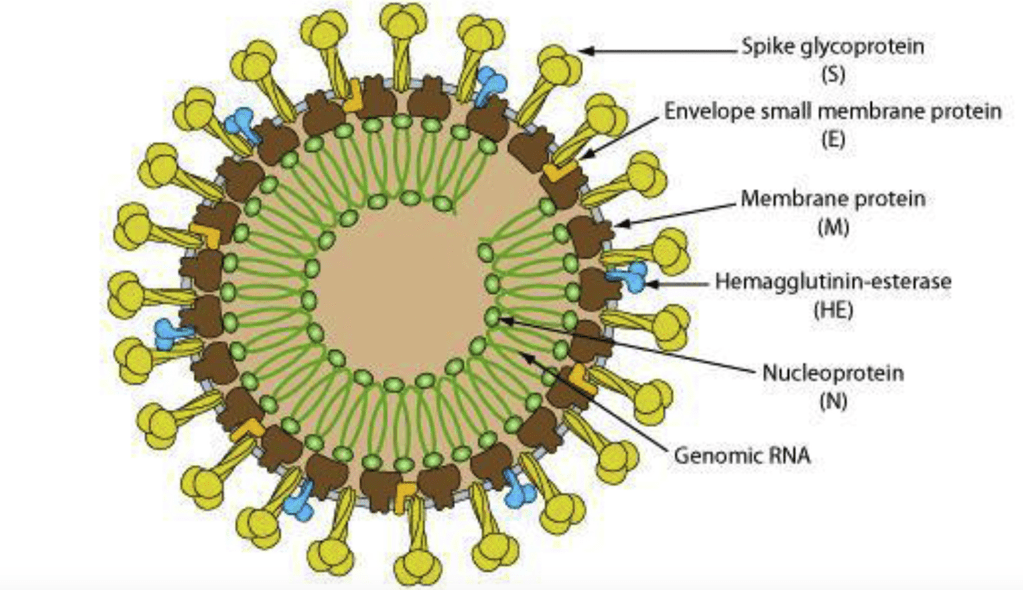
By the way, this is a simplified idea of what COVID-19 looks like. You can see the Spike protein at the top; this is what our immune system is taught to recognize if ever it enters our bodies.
8. “Why does the vaccine need such cold storage?”
The vaccines are without preservatives, so the dramatically cold temperature is necessary to keep the mRNA stable until it gets into your body. There’s a fatty substance in there that protects the mRNA (yes, fat—nice and insulating).
9. “What is the difference between the Pfizer and the Moderna vaccines?”
Here are some quick facts and differences:
| Pfizer | Moderna | |
| Days between doses | 21 | 28 |
| Volume of solution injected | 0.3 mL | 0.5 mL |
| Minimum age approved | 16 | 18 |
| # of people who received vaccine injection | 21,720 | 15,185 |
| # of people who received placebo injection | 21,728 | 15,166 |
| # of positive cases in vaccine group (After 2nd dose) | 8 | 11 |
| # of positive cases in placebo group (After 2nd dose) | 162 | 185 |
| Protection/ Efficacy against COVID19 | 95% | 94.1% |
10. “What if I’m pregnant or nursing? “
I addressed the infertility question already in my original version above, but I will expand on the topic here. First, let me say, when a new medical therapeutic is launched to trial, it is a blanket assumption that women who are pregnant will purposefully not be actively accepted into the test subject pool. Testing nonpregnant humans first is the norm (and further, wouldn’t you be mad if they DID take pregnant women without knowing anything about the safety/ efficacy? Would be irresponsible, wouldn’t it?) So given this, people shouldn’t be shocked to know that there is no firm published data on the COVID vaccine and pregnancy/lactation. However…we know the science. We know the recipe of this vaccine. We know how the mRNA tech works. We know that COVID is astronomically more deadly than this vaccine could ever, ever be (see my question above about deaths in the trials). And what’s more, women receive vaccinations while pregnant otherwise (the Tdap). According to the ACOG, the vaccine should not be denied to a pregnant patient, and a lactating woman should be grouped with non-lactating women as having the same potential side effects. If I were pregnant or lactating, I would without hesitation receive the vaccine.
11. “What if I have had COVID? Can I get the vaccine? When? “
YES. While there is no absolute rule on how long to wait post-infection, be sure to feel asymptomatic from COVID and out of your official isolation period. Why? Because your immune system has worked very hard these last several days to weeks in order to squelch that virus. When the immune system goes through the trenches of something new, recovery is important. You may have heard to wait 90 days after your infection. This is due to the fact that re-infection with COVID is unlikely for a patient within 90 days of initial infection. Since your antibodies are actively circulating your bloodstream, the vaccine isn’t immediately needed. But, if you feel comfortable with your stage of healing and the vaccine is available to you, show that deltoid! The vaccine will not harm you based on recent infection with COVID. But for goodness sake, focus on getting out of isolation, first! As usual, be prepared for the projected side effects of your immune system being stimulated: fever, aches, and fatigue, etc which normally subside in 1-2 days.
12. “If I’ve had COVID, why would I need the vaccine, anyway? “
Let me put my nerd glasses on. As you may know, some infections are a once-in-a-lifetime deal (like chicken pox). Some infections can be contracted on a regular basis (like the common cold or the flu). Why is this? Some infections produce lifelong proof of having had it, in the form of memory antibodies, called IgG. Some infections produce IgG that only hang around for weeks to months or a few years. Therefore every illness produces varying impacts on the immune system’s memory. COVID, from what we’ve seen over the last year, seems to produce memory antibodies for around 3 months— sometimes more, sometimes less depending on individual factors. If you take the blood of those who’ve been infected with COVID, their antibodies aren’t hanging around as long as we’d ideally wish (AKA lifelong!). One study at UCLA, using 34 patients with a recent history of known mild COVID, found that half of their antibodies disappeared in 36 days (this is called a half-life). While this is a very small study, their findings are important for beginning to understand the immunity we gain from natural infection versus the immunity we can gain from vaccination. It is important to mention, however, that your antibodies don’t necessarily go to ZERO after actual infection, they just may dip to low levels and may not allow a robust defense on the next go-around.
Why would a vaccine produce a stronger, longer-lasting immunity? Well, during an active infection, your immune system works really hard to let you live through it, and hopefully with minimal damages. Natural infection can wear you out, so the antibodies that hang around can be fleeting. In comes a vaccine. The COVID vaccine is intended to show the immune system how to recognize COVID without particularly stressing your body in the process. Actual infections are stressful, especially one your body has never seen before. A vaccine’s instruction process is not. I think I can speak for all of us when I say— we all learn best under relaxed and non-intimidating situations. In times of high stress, things are sometimes a blur. Learning under pressure is stressful. Think how your immune system feels. This is why a vaccine can potentially lead to longer lasting immunity against a virus rather than the infection itself.
13. “Will this be something we have to get annually? “
Unsure, to be honest. We hope the memory antibodies hang on thanks to the vaccination. That’s the plan. People have been assuming it’d be like the annual flu shot. I’m not so sure. Keep in mind the flu shot is a different type of vaccine than the COVID vaccine. The flu shot takes the inactivated virus (people sometimes say “dead” virus but don’t get me going on that debate.) COVID’s vaccine has just the instruction manual on how to recognize that Spike protein, remember? The flu shot needs refreshed every year because the flu mutates a lot as it makes its way around the globe in 12 months. COVID’s Spike protein doesn’t look different even with lots of mutations to it or other parts of the virion. If you always wear a gold watch but one day you show up to work wearing a silver watch, I’d still know it was you. Small change. Nothing alarming. The answer to this question will come as we study antibody retention in the vaccinated humans of the world (and infection rate post-vaccination is a nice indication, also).
14. “Why do children react so differently to COVID19 than adults do? “
Many, many, many factors have been examined in this situation. The same people are also asking why children aren’t spreading the virus as much as adults seem to. Guys, I could examine this question for days. We don’t have time for that, so I’ll summarize some leads researchers are going with.
-Adults/elderly are more likely to have coexisting conditions such as hypertension, diabetes, heart disease, obesity, COPD, and vascular diseases. Having any of these conditions has shown to put adults/elderly more at risk for death due to COVID. Children in general don’t have vascular damage like their parents or grandparents do. BUT some children are manifesting with vascular damage due to their COVID infection, which has directed scientists toward studying the endothelial damage COVID can cause.
-Children have a stronger innate immune response (think of the bouncers at the entrance of a bar…they see you coming). Innate immunity strength is key in warding off COVID. Adaptive immunity is where the memory antibodies come in to play, and kids are better at doing that, too, compared with adults/elderly.
-Interestingly, melatonin is being studied in the relationship of COVID severity. Children have higher amounts of melatonin, and melatonin is known to significantly support immune cell activity and numbers. This lead is so strong, a study on melatonin’s prophylactic effect on healthcare workers contracting COVID is currently in progress. As you may remember, bats carry coronaviruses but don’t fall very ill from them, and they happen to have a high concentrations of melatonin. As humans age, melatonin expression is lower than in infants and children. Interesting. Will be awaiting further info on this correlation in respect to COVID.
-Children are known to have a wider variety of microbiota in the oropharynx (mouth/ throat), nasopharynx (where the back of the nose and throat meet), and the gut (stomach/intestines). Microbiota = a baseline lasting collection of viruses and bacteria in an area of the body that is considered “normal flora.” Think of probiotics, or good bacteria. Kids have a more impressive showing of good germs, and this means more bodyguards, more good soldiers. The more good guys present, the less bad guys have room to “grow.” COVID likes to take advantage of a weak host, and with lots of good defenders at the entrance, it’s likely COVID won’t thrive too well. Adults have less variety and colonization to their microbiota, therefore the theory is that COVID takes advantage of that.
More on the leading research mentioned in this question, here.
15. “What other vaccines are in development?“
Here is a nice list with some timelines and explanations of vaccine types. There are some interesting ideas (Novavax uses insects and worm cells!)
_________
This post is really long, and trust me, I could have gone on and on and on.
So, next time I see you, you get an elbow-bump for reading it all, because hugs are frowned upon right now. I’m a hugger, so it’s been rough.
I feel like these topics are the most important points to cover at this moment. Please let me know if you have any other questions, and I will point you in a trustworthy direction to a solid source.
Questions 10-15 were added as an addendum at a later date due to questions posed to me after the original post.
Live long and vaccinate.
 Piece of Mind

Elaborate but good explanation….
LikeLike
I’m so proud of you! Thank you for teaching on a level we can understand ❤️
LikeLike
I LOVE YOU 🙂 🙂 This was AWESOME 🙂 THANK YOU THANK YOU 🙂
LikeLike
So helpful! Sending to my friends and family to share the reasons they need to say yes!
LikeLiked by 1 person
Excellent overview, I am very impressed!
LikeLike