 Posted by
 Many of you may know that I sometimes talk in metaphors and similes, mainly when I’m explaining a complex concept to someone. A quote that has stuck in my mind for years is, “If you can’t explain it to a six year old, you don’t understand it yourself.” Albert Einstein said this. I’ve heard he was a smart man. I’m going to try to use this concept during today’s post when helping you to understand the difference between viruses and bacteria.
Viruses are considered parasites because they cannot live without taking advantage of a host cell. I feel like I know a few people like this…but, I digress. A virus cannot reproduce itself. Bacteria reproduce independently. That’s the very basic difference. A virus hijacks the controls and the genetic material of a living cell and tells it to spread its viral particles. Rude. But very effective and sometimes very dangerous.
Examples of viruses:
- Influenza AKA “The Flu.”
- Norovirus AKA “The Stomach Bug.” (If you call this the “stomach flu,” you’ll be victim to a 10-minute lecture from me as to why there is no such thing as the “stomach flu.” Family and friends of mine have been subject to this very lecture at one point in time. Sorry, not sorry!)
- Rhinovirus AKA “The Common Cold.”
- Varicella Zoster AKA “Chicken Pox.”
- Herpes Zoster AKA “Shingles,” Chicken Pox’s big brother.
- Hepatitis A, B, C, D, and E.
- Mononucleosis AKA “Mono”
- Rabies
- Malaria
- HIV
As you know, some of these are not so scary. Most I mentioned can be and are. Especially if you have a terrible immune system, or are very young/very old.
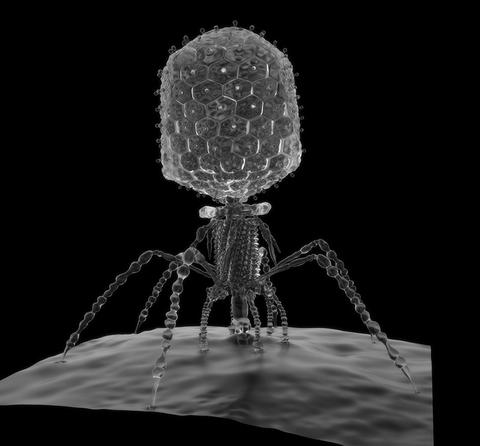
Viruses look like little machines. And not one virus looks the same. There are FEW treatments against viruses when you compare to the abundance of antibiotics for bacterial infections. For the flu, there exist about 4 medications that only work if you start taking one within the first 24-48 hours of your FIRST symptoms. For shingles, there are about 3 medications, and again— you must begin within the first 24-48 hours of symptom presentation or they won’t help much. All antiviral medications do is shorten the duration of your illness—by about 1-2 days. Maybe.
Vaccines are one true proactive action against viruses. As I said before, viruses are little machines. Take a couple parts of that machine, put it in a solution (injections, nasal mists, and oral liquids are 3 formulations), and the human body will be able to recognize a full, live virus you may contract later based on the pieces/parts it has seen before. The metaphor I use when explaining vaccines is this: If you saw a tire, a steering wheel, a seat belt, and an engine on the side of the road, you’d guess it was from an automobile. A vaccine works the same. It uses a few significant parts of a virus’s structure so that the immune system can know what it sees later on.
Anyway, on to bacteria. Bacteria are single-celled organisms. They can self-replicate so they’re pretty stable and sure of themselves. What’s really neat about these guys is their ability to live ANYWHERE. Some can only live in the heat (think hot tub water…ew). Some can only live in really acidic environments (think your stomach—H. Pylori is its name and it causes ulcers and horrible reflux). Some thrive where oxygen is sparse (think your colon— C. difficile is one, E. Coli is another). THIS is why only certain antibiotics work on certain bacteria. And THIS is why if you take too many doses of an antibiotic over your lifetime, the bacteria in your body begin to build a defense against that medication and resist its powers. We don’t want that.
More examples of bacteria:
- Streptococcus (can cause strep throat, pneumonia, and meningitis to name 3). There are many kinds of streptococcal bacteria.
- Mycobacterium tuberculosis AKA “Tuberculosis.”
- Staphylococcus aureus (can cause cellulitis, sepsis, pneumonia, skin infections, etc). This one lives in very small amounts in the nose of 30% of people, and it’s on most people’s skin at all times. If it gets into an open skin wound or into your bloodstream somehow, bad news bears.
Antibiotics treat bacteria. You’ve probably taken penicillin, azithromycin (Z-Pak), or Bactrim before. They treat bacterial infections only, and not, for instance, the common cold.
If you’re unsure whether your bronchitis or your sinus infection or your 3-day bout of diarrhea is viral or bacterial, see your primary care provider. There are sometimes in-office tests we can run to know what you’re suffering from. Sometimes your clinical presentation on examination tells us if it requires antibiotics or not.
I almost wrote 80 more paragraphs on this subject, but deleted them. Why torture you? Trust me, this post is the short version. It is just such an important topic. It’s crucial to invest time and money into understanding viruses and bacteria because if we can eradicate 1 or 2 or 20 of them, that means less disease. That means greater quality of life. That means longer average life expectancies.
I hope you exit this browser window with a greater understanding of what makes viruses and bacteria different, and why it’s a good bit of information to know.
Now, go tell your friends. I’ve officially given you something to share at parties. Or something to tell your family at Thanksgiving (“Please pass the cranberry sauce…hey Aunt Sylvia, have you heard how viruses penetrate your cells?”). I’m sure you’ll be a huge hit.
Thanks, as always, for reading.
BONUS: Below are pictures of some viruses and bacteria I mentioned in this post. Happy viewing!
Reference:
Lodish H, Berk A, Zipursky SL, et al. Molecular Cell Biology. 4th edition. New York: W. H. Freeman; 2000. Section 6.3, Viruses: Structure, Function, and Uses. Available from: https://www.ncbi.nlm.nih.gov/books/NBK21523/
The featured image is a T4 Bacteriophage. Its source is: https://usaginonedoko.online/products/enterobacteria-phage-t4
Influenza Virus:
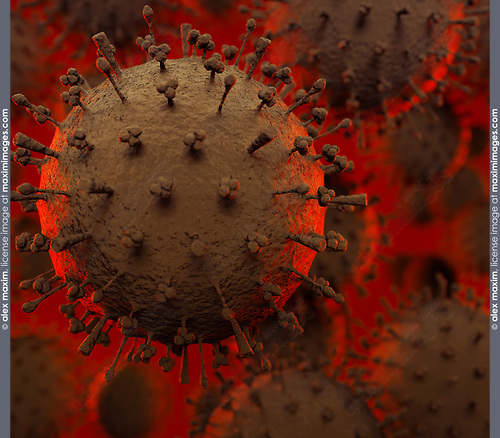
(Copyright Alex Maxim / http://www.MaximImages.com)
Shingles Virus:
(https://microbewiki.kenyon.edu/index.php/Varicella-zoster_virus)
E. coli bacteria:
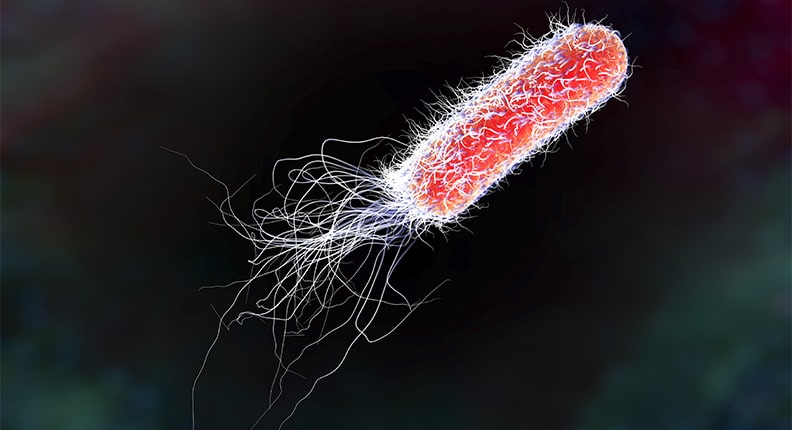
(https://www.biocote.com/blog/five-facts-e-coli/)
Staphylococcus Aureus (here in its MRSA form):
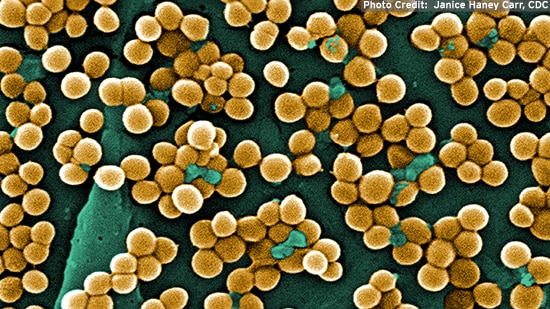
(https://www.ecolab.com/expertise-and-innovation/resources/microbial-risks/staph-aureus-mrsa)
 Piece of Mind
I love the car metaphor! I’m totally going to use that from here on out. You rock, lady!
LikeLiked by 2 people