 Posted by
 Telemedicine is not a new concept in healthcare. Insurance companies have utilized this patient access model for years, and various specialties such as psychiatry count on these types of encounters to reach a larger patient population due to the lack of psychiatrists in practice. With that being said, I never dreamed my practice in primary care would be majorly comprised of telephone encounters. I grew up in the 90s/2000s, and as a young girl, talking on the phone was my expertise. I spent countless hours practicing for telemedicine and didn’t even know it! Fast forward 20 years, and here I am 4 weeks into this new ritual. I thought I would hate it— I’m a social bug and people who know me can attest to the fact that I talk with my hands and eyes and have expressive body language. So how would I be my best self as a PA when I cannot connect in person with my patients?
Frankly, I was afraid. What if I misdiagnosed someone due to not being able to perform a heart/lung exam? What if I don’t catch someone’s ear infection or see that their ankles are swollen? The physical exam is the essence of medicine—or so I was taught. I was also taught that listening to a patient is the most important skill to master (and not interrupting them)! Solely talking on the phone forces me to listen to their words, their inflections, their pauses, their laughter, and their tears. I don’t have body language to go on. Body language is a huge part of communication. But when all I have is someone’s voice to guide me to a clinical decision, I am challenged—in a good way. I’ve had to guide people through their own physical exam, at times. I’ve asked their family members on the other end of the line to preform various tests and observations because I cannot be in an exam room with the patient. I cannot praise my patients enough. They’ve been easy to speak with, open and honest about their health concerns, and very helpful in being my teammate. After all, it takes two to tango, right?
I have a passion for educating my patients about their bodies (even when they don’t ask—sorry not sorry)… I even have an anatomy book I whip out regularly to use as a visual aid. When I normally perform a physical exam, I explain why I’m doing specific tests and what I find afterward. But with telemedicine, the patient is their own examiner. I have to guide them properly and with descriptive detail, or my assessment is flawed. Over the phone, I’ll say things like “under your jawline, do you feel any glands that are swollen?” (lymphadenopathy) or, “if you push on your cheeks on either side of the nose, does it feel tender?” (sinusitus) and “if you push on the skin of your shin, does your finger leave a dent?” (pitting edema). These exam findings sound simple enough but they’re important in my decision making. Involving the patient in my assessment has also allowed me to educate each individual on their particular health concerns. After I ask them to help me with physical findings, I tell them why I had them do that, and why it helps me. I feel more connected with the patient despite us being miles away. Not to mention, if their issue recurs in the future, they’ll have the knowledge to make educated guesses surrounding their illness. “…teach a man to fish…”
I address numerous psychiatric and mental health concerns every day. These diagnoses range anywhere from depression to schizophrenia to anxiety. Mental health concerns have significantly increased since the pandemic has limited our regular routines. I’ve even had a handful of phone conversations surrounding the topic of grief. These appointments are particularly difficult already, but over the phone they’re even more so. I want to hug the patient, and that’s not possible. I literally say, “I’m hugging you from afar.” Sometimes, I’m the only person that patient has spoken with in days, and I take that very seriously. I let them spill their souls because the weight of their worries can be heavy to carry. One day, a man spoke for 32 minutes straight about his extremely stressful job. I knew I was the only one he could vent to, and he felt so much better at the end. I have found that my patients with mental health concerns open up more over the phone than in person. Having a physical barrier between us takes some fear and nervousness out of the conversation, and I tend to get an even better understanding of their current struggles. For most, speaking face to face about depression is much more difficult than sharing details about their heartburn. But the telephone provides an extra level of courage and openness which allows for a deeper connection with the patient.
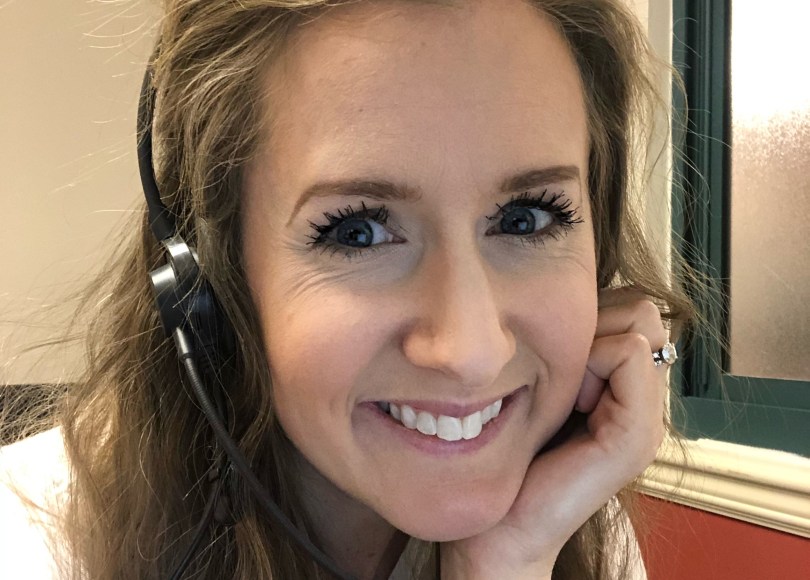
I have grown tremendously in the last month, both personally and professionally. My communication skills have been sharpened. My motivational interviewing skills have been utilized. My ears have listened more than ever before. I have seen different sides of my patients that I never noticed before. I’m realizing that a 15 minute phone conversation can make a significant difference in someone’s health care plan. I’ve also learned that a phone headset gets stuck in my hair very easily.
Overall, I’ve found the silver lining in telemedicine. My workplace clinical team is better than I ever could pray for. My passion for working in healthcare has been elevated despite this new and unique terrain. It’s amazing what some abrupt alterations in routine can do to a person. The COVID-19 pandemic has changed things…has changed us. For me and my patients, I feel we’ve never been better.
 Piece of Mind