 Posted by
 The holidays are here: that means you wear your stretchy pants to those delicious family dinners. Potatoes, stuffing, pies, and cookies await your taste buds. By January, your jeans and suit pants will be slightly snug, and you’ll start to think about which diets can help you lose your newly-gained 7 pounds quickly. The gyms will be flooded with “New Year/ New You” people, and diet food companies will increase their TV commercials. But here’s the thing: yeah, the scale’s number matters. BUT, I’m here today to discuss your waist circumference. If you’re walking around with a larger belly than you’d like, I’ll let you know why this is risky for your health and some tips on how to lose it.
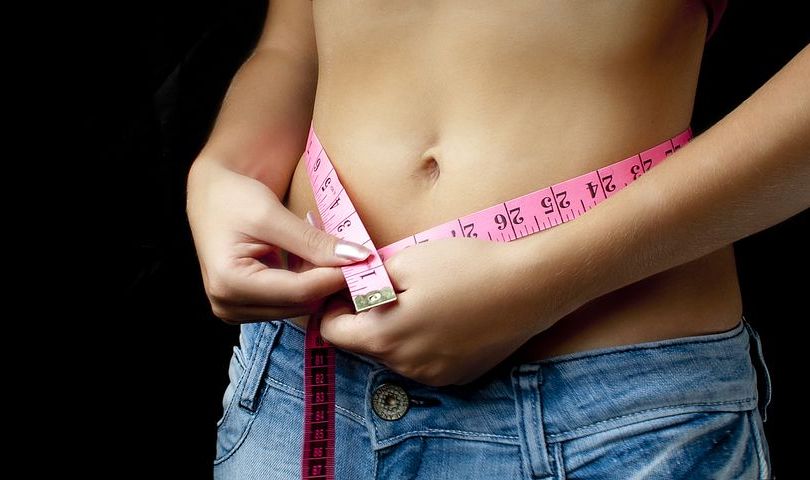
- Get a cloth/paper measuring tape (not your metal one from the toolbox).
- Find your belly button.
- Measure at that level around your waist.
Gals— you want this number under 31.5 inches.
Guys— you want this number under 37 inches.
Any higher than that, and studies have shown that you exhibit a higher risk of heart disease and diabetes, and even risk an earlier death.
Plain and simple, your waistline determines a lot about you. When I see a patient with a larger abdomen, I can safely assume a few things about their health. Here’s a great research-centered overview: “Central accumulation of body fat is associated with insulin resistance” (Engin, 2017) which is the hallmark of type 2 diabetes. Engin also points out that, “Abdominal obesity is the most frequently observed component of metabolic syndrome. The metabolic syndrome; clustering of abdominal obesity, dyslipidemia, hyperglycemia and hypertension, is a major public health challenge. The average prevalence of metabolic syndrome is 31%, and is associated with a two-fold increase in the risk of coronary heart disease, cerebrovascular disease, and a 1.5-fold increase in the risk of all-cause mortality.”
LET ME BREAK THAT DOWN: If your waistline is large, you’re slipping on a slope into high cholesterol and triglycerides, high blood sugar, and high blood pressure. Heck, you may already have all of these diagnoses in your medical chart. You’ll likely die sooner and get heart disease if you don’t have a healthy waistline or don’t get one soon. Moreover, you have a large waistline because of simple concepts: you eat poorly, you aren’t active enough, and/or your stress hormones are consistently elevated (I’ll touch on the stress hormone topic in another post). You may be thinking, “But Michelle…I do the treadmill 5 times a week and can’t lose my gut!” You’re probably not eating properly, and could do with a refresher on how to do this. I know I sound harsh, but the truth will set you free—of that gut and that bloat.
The Mayo Clinic also weighs in on life expectancy and your waistline: A 2014 study of 650,000 adults showed this relationship. In men, the larger waistline group (43 inches) had a 50% greater risk of death than the slimmer guys (37 inches), estimated to be about 3 years sooner. Women had an 80% higher chance of dying earlier (by 5 years) if their waists were 37 inches over the slimmer group of 27.5 inches (Cerhan et al).
You have two kinds of fat in the belly— the fat just underneath your skin (sits on top of the muscle) and the fat that sits amongst your organs, called visceral fat. Having too much visceral fat is what is particularly dangerous to your health. You’ve heard the term “beer belly.” This is actually a fatty organ called the omentum that sits over the stomach, colon, small intestine, liver, etc. (Picture below). Keep the omentum smaller, and your organs will be glad. A large omentum means pressure and stress on your abdominal organs, which can have lots of ramifications like bowel unrest, indigestion, vascular/blood flow issues, and back pain. Get some momentum to tame that omentum! (I’m corny, deal with it.)
Harvard published a nice statement (shocking, right?) on visceral fat: “visceral fat cells release their metabolic products directly into the portal circulation, which carries blood straight to the liver. As a result, visceral fat cells that are enlarged and stuffed with excess triglycerides pour free fatty acids into the liver. Free fatty acids also accumulate in the pancreas, heart, and other organs. In all these locations, the free fatty acids accumulate in cells that are not engineered to store fat. The result is organ dysfunction, which produces impaired regulation of insulin, blood sugar, and cholesterol, as well as abnormal heart function (2004).” Yikes. Okay, so keeping the visceral fat in check is super important.
The topic of belly fat and its predictor of disease is heavily studied in adults, but has gained attention in the pediatric population. Getting healthy is many times a family affair— dietary choices and activity level habits can run in families and households— and the pediatric population is victim to obesity today more than ever before. The adult(s) of the household normally determine meal planning and grocery items in the pantry. Start by stocking the vegetable drawer in the fridge rather than the cereal and snack shelf in the cupboard. (Un)healthy habits start young. Another pearl of wisdom: not all calories are the same. The types of food you eat matter. If you’re focusing on restricting calories to lose weight, don’t think you can eat those 100-calorie packs of cookies and be a picture of health— don’t fall into that marketing trap. Eat a nice balance of proteins, healthy fats like eggs, avocados, and nuts (almonds and pistachios are nice choices), LOTS of vegetables (like at every meal and snack on them, too), and minimal to no sugars. This means minimal to no breads, pastas, potatoes, corn, cereal, or rice. Your carbohydrate intake should be your lowest type of macronutrient in your diet. Eat this way, and you’ll shrink that tummy. Oh, and toss the soda, sweet tea, and juice. Water is your best friend. If you want to flavor it, infuse it with actual fruit or cucumbers, not that flavoring stuff in a bottle. Also, greatly reduce or totally eliminate alcohol. I know, I’m no fun. But seriously, the benefits of drinking alcohol do not outweigh the harms, especially if you’re trying to get healthier and keep your metabolism happy.
Move more than you already are. I have patients who tell me they walk miles a day at work but can’t seem to lose weight. They’re usually nurses, manual laborers, and just busy individuals. Their fitness trackers say they’re active, but their waistlines and weights don’t show it. Guess what– your body is used to this activity, so continuing this won’t just suddenly melt your fat. You have to make a change to see a change. So you walk 15,000 steps at work…okay, but this doesn’t count toward weight/fat loss if this is your usual. Is this step-count a new thing for you? You’ll see a change. Is 15,000 steps your average? Get results by strapping on some ankle weights at work if you cannot seem to fit extra exercise into your schedule. Have an extra 30 minutes in the morning or evening? Walk around the block a few times or do a mile on the treadmill. THEN you’ll see a difference.
It’s about to be 2020. Get a clearer vision on your health and longevity, and get serious about getting slim.

References:
Cerhan JR et al. A pooled analysis of waist circumference and mortality in 650,000 adults. Mayo Clinic Proceedings. 2014; 89: 335.
Engin A. The definition and prevalence of obesity and metabolic syndrome. Adv Exp Med Biol. 2017;960:1-17
Harvard Health Publishing. Abdominal obesity and your health. 2005 September. Retrieved from https://www.health.harvard.edu/staying-healthy/abdominal-obesity-and-your-health.
Mayo Clinic. Is it true that waist size can be a predictor of life expectancy? 2018 June 9. Retrieved from https://www.mayoclinic.org/healthy-lifestyle/weight-loss/expert-answers/waist-size-and-life-expectancy/faq-20348574
 Piece of Mind